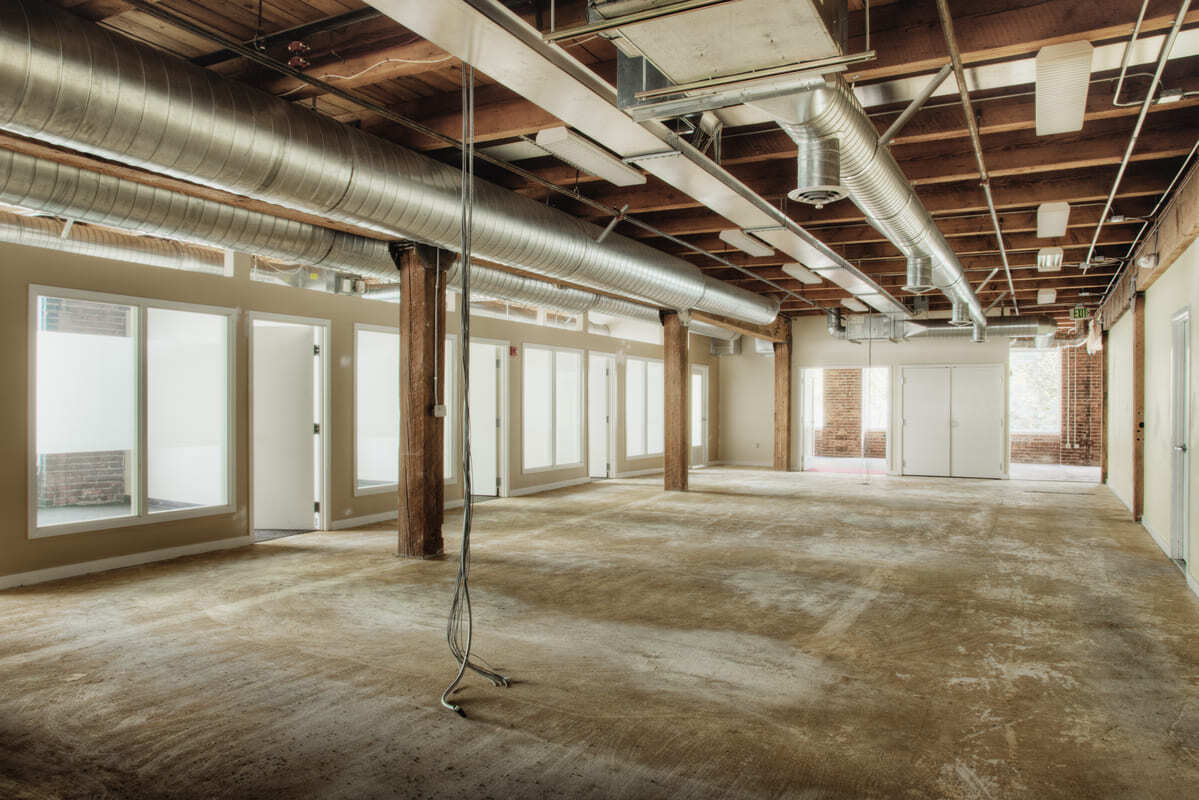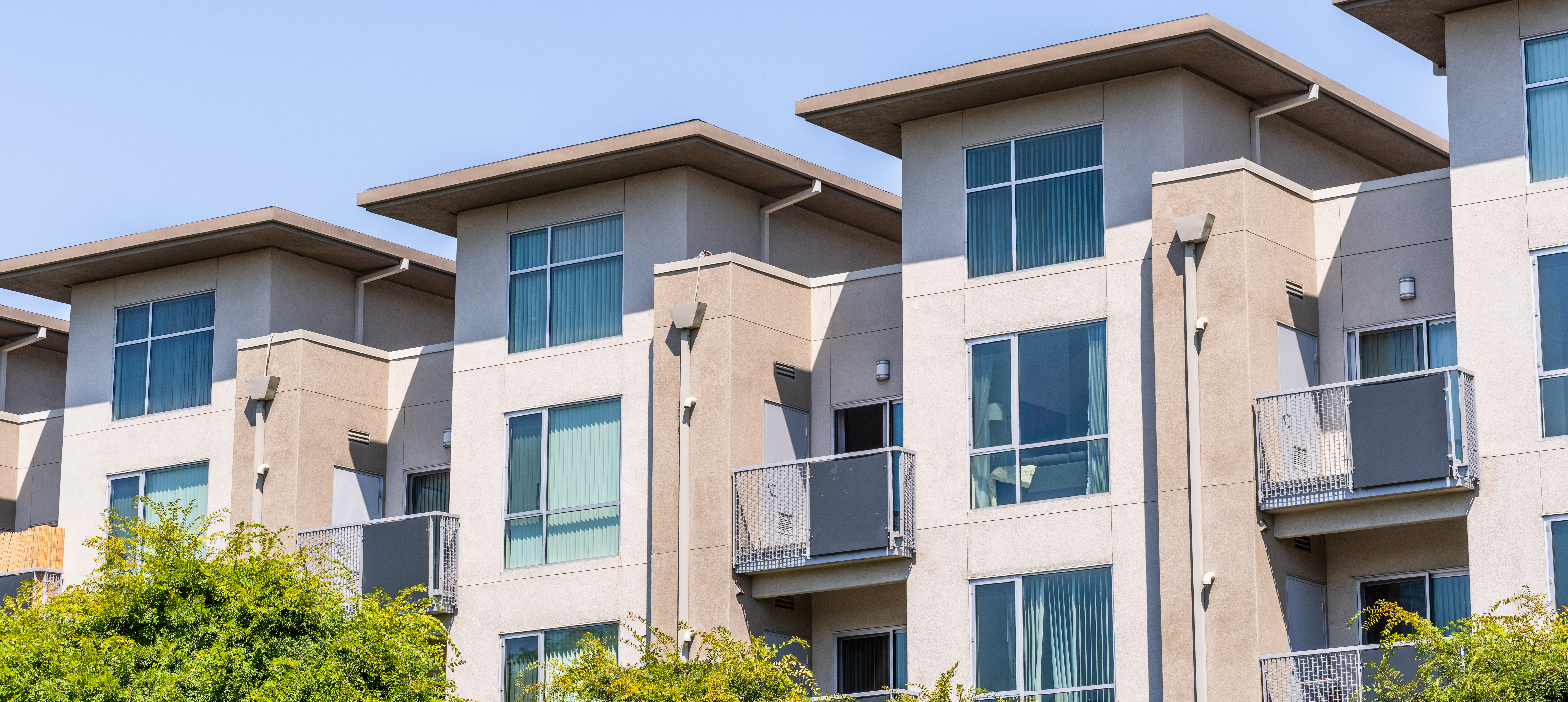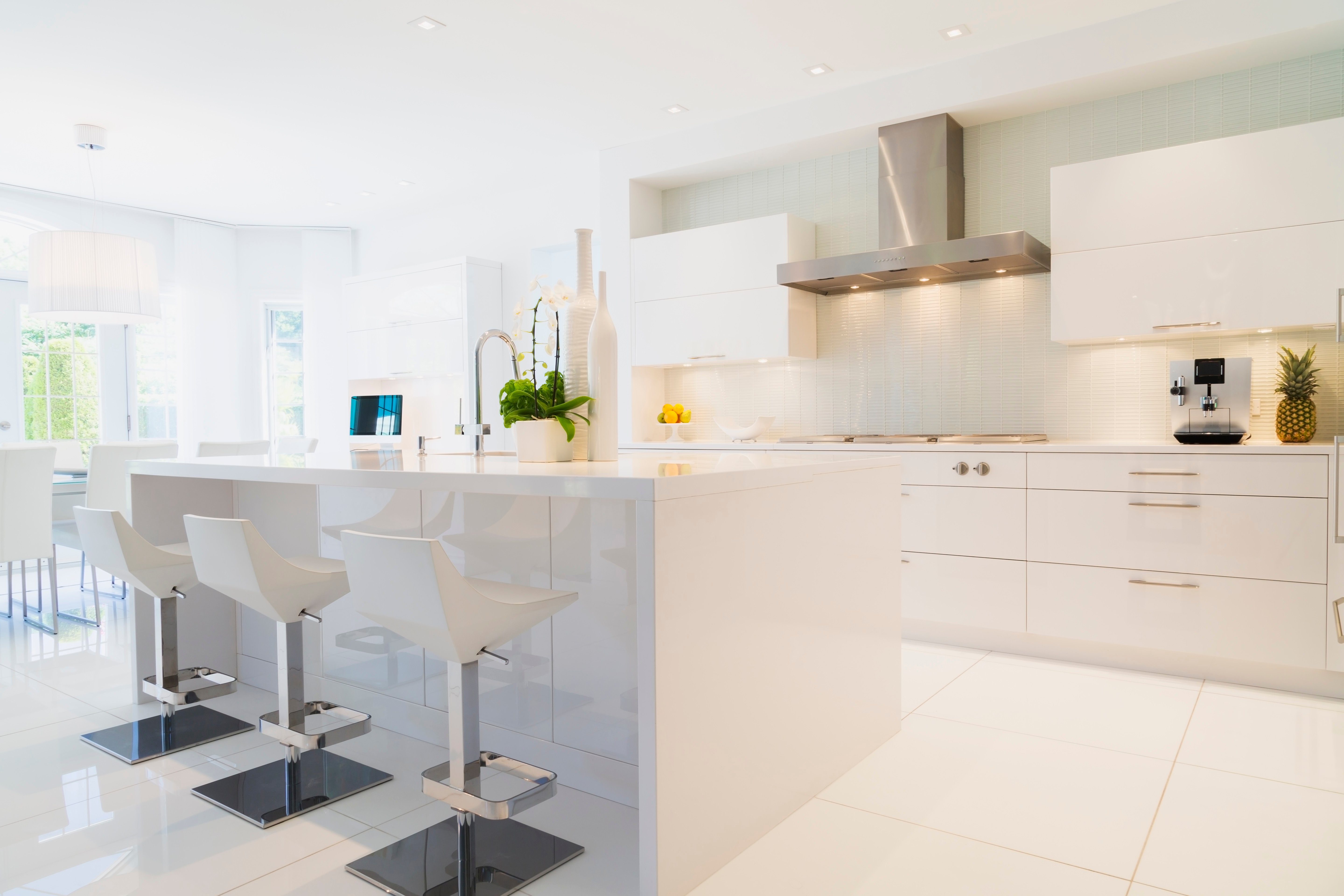
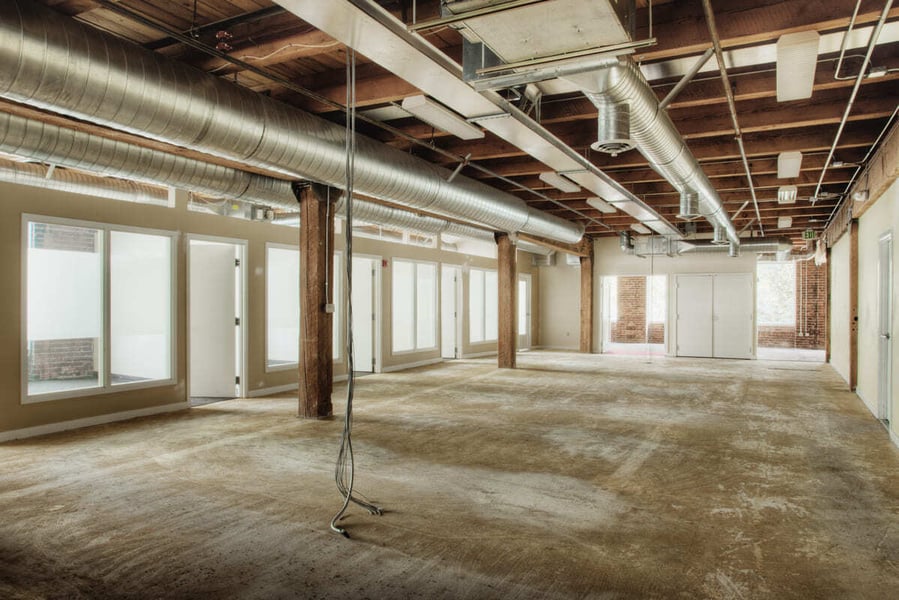
A commercial renovation updates an existing business property, from a new office layout to a full restaurant build-out. Most involve permits, several trades, and code upgrades that cosmetic work doesn't. In Chico, Butte County, and across the North State, the use of the space, the building's condition, and the local building department shape cost and schedule more than square footage does.
This guide covers what a commercial renovation contractor does, what drives cost, how long projects take, which permits apply, and how requirements change for restaurants, medical offices, industrial space, and public projects. If you're preparing a space for a new tenant, see how we work as a commercial tenant improvement contractor.
What Does a Commercial Renovation Contractor Do?
A commercial renovation contractor builds alterations to buildings used for business or public purposes. The contractor schedules and supervises the trades, coordinates with architects and engineers, prepares permit submittals, keeps the work in line with the building code, and arranges inspections through final approval. On most projects, that contractor is the general contractor and prime contractor responsible for the whole job.
Commercial work adds considerations residential projects rarely face: accessibility upgrades, fire and life safety systems, commercial-grade building systems, and construction around employees, tenants, or customers who still use the building.
Is a Commercial Renovation Contractor the Same as a General Contractor?
Yes. "Commercial renovation contractor" describes the type of work, not a license. In California, the license for this work is the Class B General Building Contractor license issued by the Contractors State License Board (CSLB). A commercial renovation contractor is a licensed general contractor whose project history leans toward commercial buildings. When you compare contractors, look at that history: how many projects like yours they've built, in buildings like yours.
What Services Are Included in a Commercial Renovation?
Commercial renovation services range from finish upgrades to full interior reconfigurations and building system replacements. The right scope depends on the building's condition, how the space will be used, and what the owner or tenant needs it to do.
Most projects combine several of these services:
- Office renovations. New layouts, private offices and meeting rooms, lighting, and finishes.
- Retail and storefront renovations. Sales floors, fitting rooms, and storefront or facade changes.
- Tenant improvements. Build-outs that prepare a space for a new or existing tenant. Learn about our tenant improvement services.
- Restaurant and food facility build-outs. Kitchens, hoods, plumbing, and finishes that meet health code.
- Medical and dental office improvements. Exam rooms, plumbing, and specialty electrical.
- Building system upgrades. Electrical, plumbing, HVAC, and lighting work coordinated across licensed trades.
- Accessibility and code upgrades. Entrances, restrooms, and routes brought up to current requirements.
See our full range of commercial construction and remodeling services.
Experts In Your Home has served Chico and the North State since 1948 under CSLB license #143778. Our commercial work includes the Commercial Kitchen Remodel, the Oroville Convention Center, and the Paradise Shopping Center.
How Much Does a Commercial Renovation Cost in Northern California?
No single cost per square foot holds up for commercial renovation. The use of the space, the building's condition, and the permit path change the price more than size does, so a restaurant build-out and an office refresh of the same size can land far apart. The most reliable number comes from a contractor reviewing your building and scope early, before design is final.
What Drives Commercial Renovation Costs?
- Type of use. Kitchens, medical suites, and production space need more systems work than offices or retail.
- Existing conditions. Older buildings can hide outdated wiring, plumbing, or structural issues that must be fixed first.
- Accessibility upgrades. Altering a space can require upgrades to entrances, restrooms, and routes outside the area you're changing.
- Building systems. Electrical service, HVAC capacity, and plumbing, plus Title 24 energy requirements for lighting and mechanical work.
- Permits and agency review. Plan check, inspections, and added reviews such as environmental health or architectural review.
- Working around an occupied space. Phasing, after-hours work, and protecting occupants add coordination and labor.
- Materials and finishes. Flooring, fixtures, and lighting selections.
How Is a Commercial Renovation Priced?
- Lump sum. One fixed price for a defined scope. Works best when plans are complete. Changes are priced as change orders.
- Cost-plus. You pay actual costs plus an agreed fee. Flexible while scope is still developing, with less price certainty up front.
- Guaranteed maximum price (GMP). Cost-plus with a ceiling the contractor agrees not to exceed for the defined scope.
Talk budget at the start, when options are cheapest to compare. Property managers and brokers can request a free quote for tenant improvement work.
How Long Does a Commercial Renovation Take?
A commercial renovation timeline depends on the project's size, the permits it needs, and whether the building stays open during construction. Most projects move through four phases: planning and design, permitting, construction, and closeout. Permitting and long-lead equipment are the steps owners most often underestimate, so they belong in the schedule from the first meeting.
Planning and Design
Bring the general contractor and the architect in together, with a budget in mind. Owners who start with an architect alone often end up with a design that costs more than they planned to spend, then pay for a redesign. During preconstruction, the contractor prices options as the design develops, finds existing conditions and code triggers early, and checks lead times on equipment like electrical gear and HVAC units.
Permitting and Approvals
Plan review time depends on the jurisdiction, the project's complexity, and how many rounds of corrections are needed. Some projects also need reviews outside the building department, such as Butte County Environmental Health for food facilities or architectural review for exterior changes in Chico. Complete, coordinated plans reduce correction rounds.
Construction
Construction covers demolition, framing, building systems, and finishes. Material lead times, trade scheduling, hidden conditions found during demolition, and work around an open business set the pace.
Final Inspections and Closeout
The space can't open until final inspections, agency sign-offs, and occupancy approval are complete. Closeout also includes punch list items, equipment manuals, warranties, and as-built records for the owner.
What Permits Does a Commercial Renovation Need in California?
Most commercial renovations in California need a building permit when the work changes the layout, touches electrical, plumbing, or mechanical systems, or affects the structure. Finish work such as painting, flooring, and cabinets usually doesn't. Location decides which building department reviews the project, and the use of the space or changes to the exterior can add zoning and agency reviews.
Which Building Department Reviews Your Project?
Projects inside Chico city limits go through the City of Chico Building Division. The Town of Paradise has its own building department, and projects in unincorporated Butte County go through the Butte County Department of Development Services. Each sets its own submittal process and fees.
What Chico Zoning Rules Affect a Renovation?
- Parking. Under Chico Municipal Code Chapter 19.70, when an expansion, intensification of use, or change of use raises the required parking by three or more spaces, the added spaces must be provided. Converting retail to a restaurant, or an office to a medical office, is where this usually comes up. Non-residential uses in the Downtown Parking Area have no parking requirement.
- Architectural review. Under Chapter 19.18, projects that need a building permit for a new structure, or that change the exterior of an existing one, go through site design and architectural review. That includes storefront and facade redesigns. The Director can approve minor projects without a hearing before the Architectural Review and Historic Preservation Board.
Does Title 24 Energy Compliance Apply?
California's Title 24, Part 6 energy standards apply when a renovation adds or alters lighting, HVAC, water heating, or the building envelope. The requirements generally apply to the systems being altered, not the whole building, but lighting and mechanical changes trigger them often.
How Do Accessibility Requirements Affect a Renovation?
When you alter a commercial space in California, the building code usually requires accessibility upgrades along the path of travel to that space, not only in the area you're changing. That can include the accessible entrance, the route to the altered area, restrooms, drinking fountains, and signage. How much you must spend depends on the project's adjusted construction cost compared with a state valuation threshold, under California Building Code Section 11B-202.4:
- At or below the threshold: the cost of path-of-travel upgrades is limited to 20% of the adjusted construction cost.
- Above the threshold: full path-of-travel compliance is required, unless the building official finds it an unreasonable hardship. Even then, at least 20% must still go toward accessibility.
The Division of the State Architect (DSA) resets the threshold every January. Check the current figure on DSA's Access Compliance Reference Materials page. The federal ADA Standards for Accessible Design also apply, and California's requirements are often stricter.
How Do Requirements Change by Type of Space?
The use of a space decides which codes and agencies apply. Four uses add the most requirements:
- Restaurants and food facilities. California law requires plans for a new or remodeled food facility to be reviewed by the local environmental health agency before work starts. In Butte County, Butte County Environmental Health must approve or reject plans within 20 working days. Plans also go to the building department, which can't issue the permit until Environmental Health approves.
- Medical and dental offices. State clinic standards, known as OSHPD 3 and maintained by the Department of Health Care Access and Information (HCAI), apply only to clinics licensed by the state. Licensed primary care clinics are reviewed by the local building department. A private physician or dental office that isn't licensed as a clinic isn't subject to OSHPD 3, though it must still meet the building code. Hospital work is a separate category.
- Industrial and production space. A change in process, storage, or equipment can change the building's occupancy classification and trigger fire sprinkler, alarm, or exiting upgrades. Hazardous materials, high-piled storage, heavy equipment loads, and added electrical capacity each bring their own review.
- Public and government work. Public works contracts paid for in whole or in part with public funds require prevailing wages. Contractors and subcontractors must register with the Department of Industrial Relations (DIR) and keep certified payroll records. Projects of $25,000 or less ($15,000 or less for maintenance) are exempt from registration, but prevailing wage still applies to public works over $1,000.
How Can You Minimize Disruption to Your Business During a Renovation?
You can limit disruption by phasing the work, moving high-impact tasks outside business hours, and planning around your busiest dates before construction starts. Not every building can stay open during a renovation, so decide early which areas must stay in use and share that with your contractor.
- Phased construction. Finish one area at a time so others stay open.
- After-hours scheduling. Move noisy work, utility shutdowns, and deliveries outside business hours where the schedule allows.
- Clear communication. Tell employees, tenants, and customers what's closed, when, and for how long.
- Safe, accessible routes. Separate work zones and keep required exits and accessible routes open.
What's the Difference Between Commercial Renovation and Commercial Remodeling?
In everyday use, commercial renovation and commercial remodeling mean the same thing, and the building code uses neither term. What matters is the scope of work, because scope decides whether you need a permit. Under California Building Code Section 105.2, painting, papering, tiling, carpeting, cabinets, countertops, and similar finish work don't require a building permit. Layout changes, building system work, and structural work do.
A project that mixes both, such as new flooring plus relocated walls, needs a permit for the regulated work. Your local building department makes the final call.
How Do You Choose a Commercial Renovation Contractor?
Choose a commercial renovation contractor by verifying the license, checking experience with your type of space, calling references, and reviewing how the proposal defines scope and handles changes. Ask who will manage your project day to day. Price matters, but a proposal that leaves out scope costs more later.
- License and insurance. Confirm an active Class B license with the CSLB license lookup, and ask for proof of liability and workers' compensation coverage.
- Experience with your use. A restaurant, clinic, or production space calls for a contractor who has built that use before.
- References and past projects. Ask to speak with owners or property managers who had similar projects.
- Clear scope and pricing. The proposal should list inclusions, exclusions, allowances, the pricing structure, and how changes are handled.
- Project management and communication. Ask who oversees the schedule, coordinates subcontractors, sends updates, and handles surprises.
- Local knowledge. A contractor who works in Chico, Paradise, and unincorporated Butte County knows each jurisdiction's process.
Commercial Renovation FAQs
Who pulls the permits for a commercial renovation, the owner or the contractor?
Either can, but on most commercial projects the contractor or the design professional submits the application and coordinates inspections. The permit holder is responsible for the work matching the approved plans. Put permit responsibility in writing in your contract.
Do I need an architect for a commercial renovation?
Not always. Finish work and some simple interior changes can proceed without architectural plans, while structural changes, changes of use, and complex layouts usually need plans from a licensed architect or engineer. The building department decides which drawings it will accept. Either way, involve your contractor while the design can still change.
Does Title 24 apply to commercial renovations?
Yes. Title 24 is California's full building standards code, so every permitted renovation falls under some part of it. Which parts apply depends on scope: Part 2 for building and accessibility, Part 6 for energy when lighting or HVAC changes, and Part 11 (CALGreen) for certain larger alterations.
How far in advance should I plan a commercial renovation?
Start as soon as you know the date the space must open or a lease begins. Work backward from that date through closeout, construction, permitting, and design, and add time for equipment lead times and outside reviews such as health department plan check. Projects tied to a lease start date need the most margin.
How is a renovation different from a tenant improvement?
A tenant improvement is a type of commercial renovation that prepares a leased space for a specific tenant, often with costs shared under the lease. Renovation is the broader term and includes work owners do on their own buildings. For more, read our guide to commercial tenant improvements.
What areas does Experts In Your Home serve?
Experts In Your Home serves Chico, Butte County, and the surrounding North State, including Paradise, Oroville, Magalia, Durham, Gridley, and Orland. Contact us to confirm availability for your project location.
Ready to Plan Your Commercial Renovation?
The best time to bring in a contractor is before the design is locked, while budget and scope can still change. Experts In Your Home has served Chico and the North State since 1948 as a licensed general contractor (CSLB #143778), working with owners, property managers, and brokers on offices, retail spaces, commercial kitchens, and tenant improvements. Learn more about our commercial construction and remodeling services.